Companionship is the main quest.
Ears
The near ear follows a sound while the feet remain on dry ground. Read the posture record.
Log approach
The outside path around the log leaves a route back into the ferns. Open the trail concept.
Dry resting place
Leave the firm patch clear while the companion decides where it can wait. Read the refuge record.
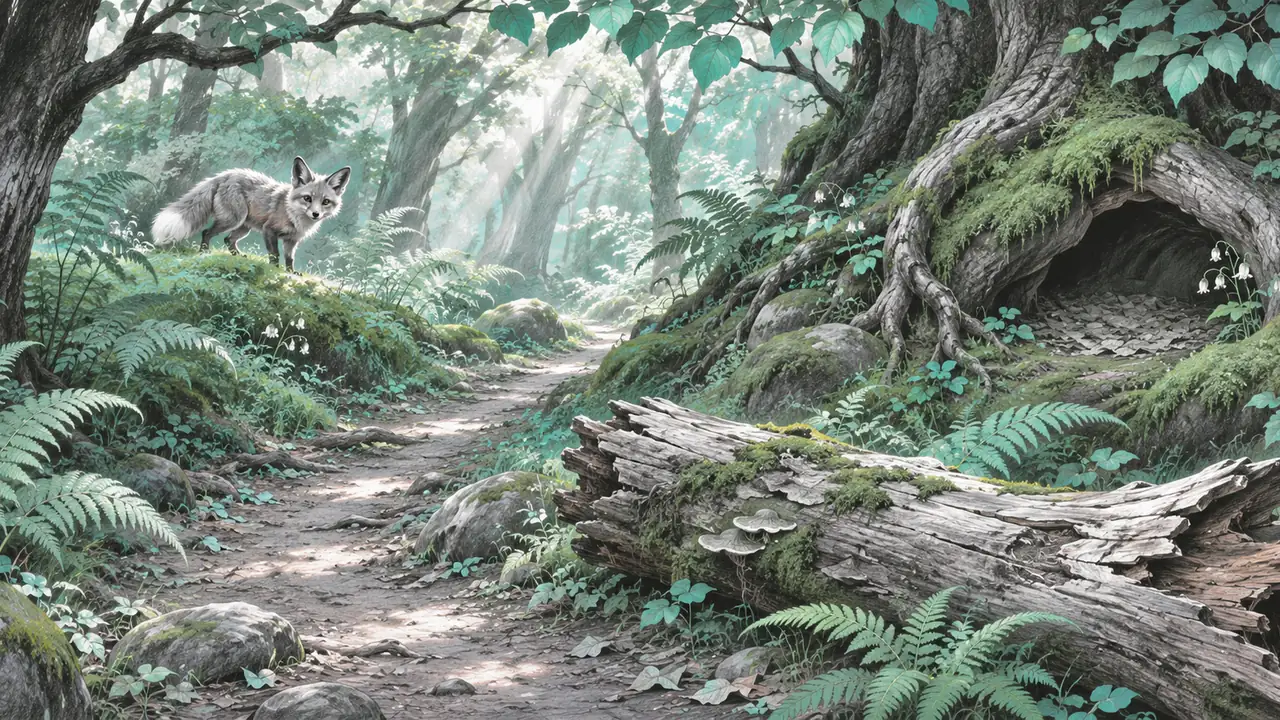
A small animal pauses at the edge of the trail. Its ears follow the sound of a footstep, but it has not moved toward the keeper. The path has a dry place to stop and a low log that leaves two ways around it. Petmask Studios develops companion games about giving an animal time and room to decide which approach it can trust.
Choose a part of the panorama to examine the ears, the tracks or a place to wait. A field detail opens below the picture. The rest of the trail stays in view so you can see what else was near the animal when it made a particular move. The same references can help you decide how to approach without assuming that every alert movement is an invitation.
Share a path before you solve the obstacle
Room to Follow starts in a fern bank where a wary companion can leave by either side. The keeper can stop short of the shelter and let the animal choose a route. A shared crossing begins when both can reach the fallen log from directions that still leave them a way back.
At the Quiet Ford brings the pair to a shallow stream. A person can steady a floating branch while the animal tests a dry stone. If the creature retreats, you can keep the approach open and wait for another look rather than carrying it across. The right move is often small enough to revise.
Look at the feature making a difference
The Companion Index presents both studies by posture and trail obstacle. Open a whole project in place before following its full prototype page. The Trail Volumes keep changes to distance, a dry resting point and the step into water in the order they were tested. Each volume has a recent milestone and its earlier work.
The current concepts are fictional prototypes. They focus on the shared attention needed to walk a short route. An animal can pause, look back and continue from a place that remains useful. The keeper can learn something about the next step without making the companion move on demand.